|
The development of mantel clocks
The Collectible Mantel Clocks
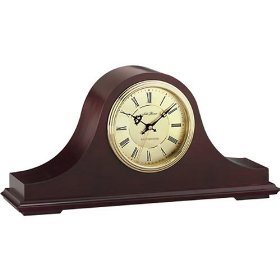
The weight driven clock was more in use generally as it was by far not as expensive and was more durable. During the seventeenth century it tended to be the one and only clock in the house and its chiming could be heard in all the rooms. The table clock had a far quieter chime as usually was not the only clock in the house and it could be carried around. Even the first table clock had a handle and a silencer, this enabled the owner to carry the clock to his bedroom and to turn the bell off so he would not be disturbed in his sleep. Additionally some table clock had an alarm. To check the approximate time in the dark some bracket clocks had a chord, when pulled the nearest hour would chime. Antique mantle clocks are now These spring driven clocks were also known as bracket clocks, this is because of the mounted bracket that some had, enabling the owner to hang the clock on a wall. The clocks were often found on tables on the mantel, later a beautifully decorated back plate was fashionable, this fashion ended with the end of the 18th century. This back plate would be seen when the clock stood in front of a mirror. Most of the first bracket clocks had a verge escapement with a short pendulum. The anchor escapement was first introduced in longcase clocks. The bracket clocks were still built with the verge escapements until the end of the 18th century. The verge had a lot of advantages but the main disadvantage was that it was very sensitive when it comes to level surfaces. Moving a clock with a anchor escapement, could make it stop. The problems were solved by the end of the 18th century. This made the verge escapement obsolete. The anchor escapement was considered to be far superior, this meant that many clockmakers changed verge escapement clocks into anchor escapement clocks. This to meet the increased demand for exact time pieces. This was seen as an enormous improvement to the clocks. No consideration was given to the fact that Nowadays an antique mantel clock collector will tend to look for mantle clocks with the original verge escapement, one that has not been converted to an anchor.
Howard Miller Clocks
Return Home from Mantel Clocks
|